
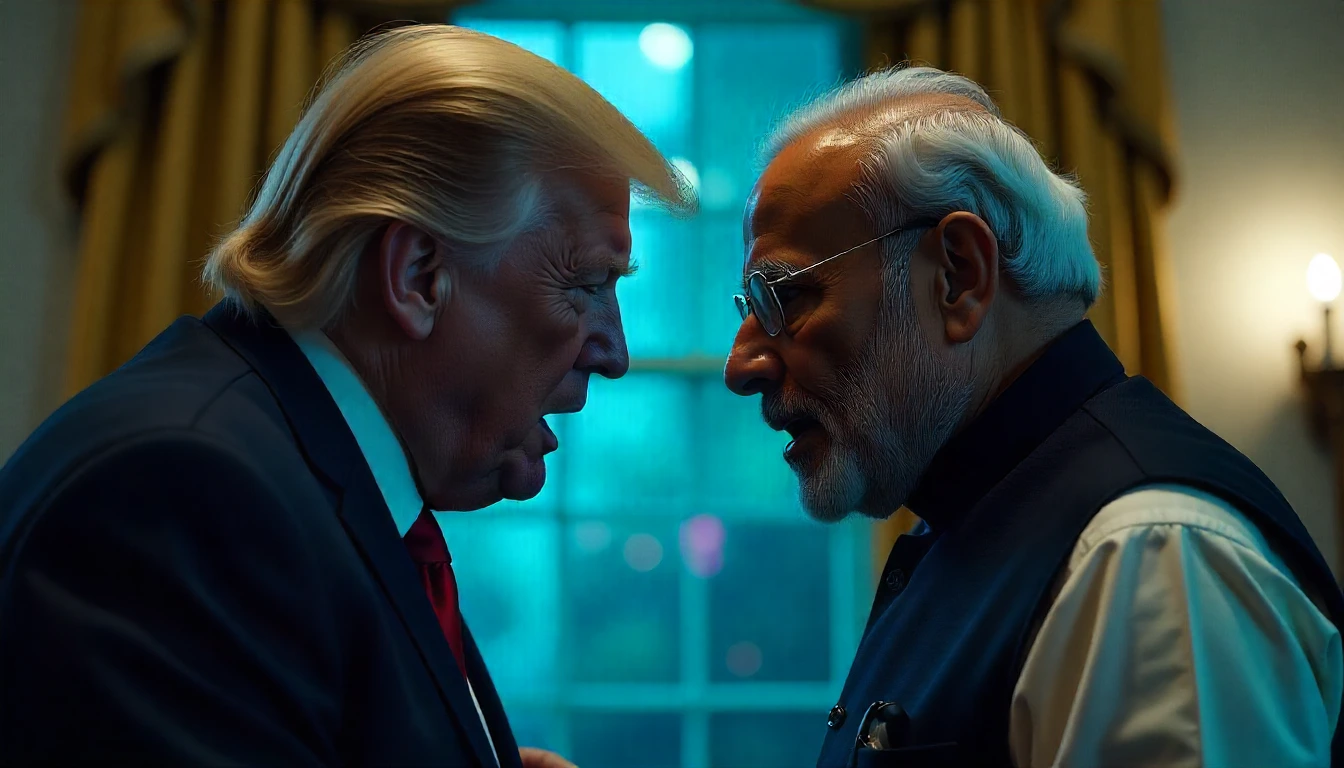
Trump and India Conflict: 5 Key Facts You Need to Know According to reports in Reuters Trump and India Conflict defined a nuanced chapter in U.S.–India ties — one without open confrontation but shaded by trade disputes, immigration limits, defense sensitivities, and diplomatic surprises.
While political relations between the United States and India have experienced highs and lows over decades, the period of Donald Trump’s presidency (2017–2021) did not witness a formal, drawn-out conflict that could be described as a diplomatic standoff. In fact, both sides continued to refer to each other as strategic partners and maintained an outwardly cordial tone in most public interactions. However, that does not mean the relationship was without friction. Beneath the surface of ceremonial visits, warm handshakes, and public displays of camaraderie, there were moments of disagreement, policy clashes, and public remarks that generated tensions between Washington and New Delhi.
Understanding these tensions requires a closer look at the context in which the Trump administration operated. Trump’s foreign policy style was often blunt, transactional, and guided by his “America First” philosophy, which sought to reduce trade deficits, protect American jobs, and renegotiate relationships to benefit the U.S. economically. While India remained an important partner in counterbalancing China’s influence in Asia, Trump did not shy away from applying economic pressure or making statements that challenged India’s positions on certain issues.
In context of Trump and India Conflict, the frictions that arose were not rooted in a breakdown of trust but in specific policy areas where the two countries’ national interests diverged.
1. Trump and India Conflict — Trade Tensions
Trade relations between the United States and India have historically been complex, shaped by issues ranging from tariffs and subsidies to market access and intellectual property rights. Under Trump, these complexities escalated into one of the most visible sources of tension between the two democracies.
One of Trump’s most notable actions in Trump and India Conflict was the termination of India’s eligibility for the Generalized System of Preferences (GSP) program in June 2019. This program had, for decades, allowed thousands of Indian products to enter the U.S. market duty-free, benefiting small and medium-sized exporters in sectors such as textiles, jewelry, engineering goods, and agricultural products. The GSP was not a free-trade deal but a unilateral benefit provided by the U.S. to developing countries to promote their exports. For India, it was particularly valuable—prior to its removal, India was the largest beneficiary of the program, enjoying duty-free access for roughly $6 billion worth of goods annually.
Trump justified the removal by claiming that India had failed to provide “equitable and reasonable access” to its markets. Behind this statement were years of U.S. complaints about India’s high tariffs, price controls on medical devices, restrictions on e-commerce operations by American giants like Amazon and Walmart-owned Flipkart, and regulatory hurdles for U.S. agricultural exports.
The decision had an immediate symbolic impact. While the actual economic damage to India’s overall exports was limited—since GSP benefits applied to a fraction of total trade—it signaled a hardening U.S. stance on trade issues. Indian exporters, particularly in labor-intensive sectors, did feel the pinch, as they now had to compete in the U.S. market without the price advantage of zero tariffs.
From India’s perspective, Trump’s move was seen as unnecessarily punitive, especially given the strategic alignment between the two countries in other areas. Indian officials attempted to negotiate a “mini trade deal” that could restore GSP benefits, but despite multiple rounds of talks, no agreement was reached during Trump’s tenure.
This episode illustrated Trump and India Conflict how Trump’s “America First” economic nationalism could clash with the interests of even close strategic partners, setting a precedent that trade concessions were no longer guaranteed simply because of broader geopolitical alignment.
2. Trump and India Conflict — Tariffs and Retaliation in Trade
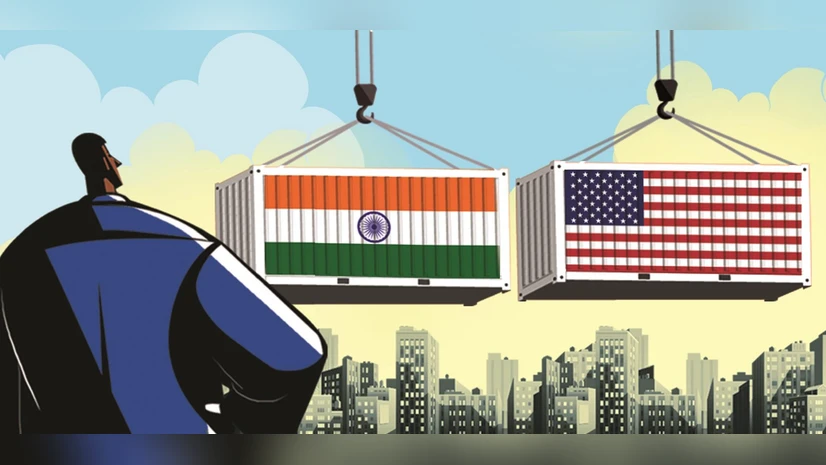
Trade tensions did not stop with the GSP issue. They escalated further with a series of tariff battles that reflected Trump’s broader use of tariffs as a negotiating weapon in international trade disputes.
In March 2018, citing national security concerns, the Trump administration imposed global tariffs of 25% on steel and 10% on aluminum under Section 232 of the Trade Expansion Act of 1962. India, which exported significant quantities of steel and aluminum to the U.S., was hit by these measures despite not being a major threat to American steel producers.
India initially sought an exemption but was unsuccessful. Viewing the tariffs as unjustified, New Delhi decided to retaliate. In June 2019, after a year of delaying countermeasures in the hope of reaching a negotiated settlement, India imposed tariffs on 28 U.S. products worth around $1.4 billion. These included widely consumed goods such as almonds, walnuts, and apples—products that directly impacted American farmers, particularly in politically important states like California and Washington.
Trump frequently used India’s tariff policies as a talking point and is discussed in relevant section of USA and India – 10 Explosive Turning Points: Pakistan is Stealing the Spotlight on a Changing Global Chessboard. One of his favorite examples was the high tariff on Harley-Davidson motorcycles—initially 100%, later reduced to 50%—which he repeatedly described as “unacceptable.” His emphasis on such issues reflected his political style, which favored simple, tangible examples over complex trade statistics.
The back-and-forth tariff measures did not spiral into a full-scale trade war, but they added an element of friction to the broader relationship. For Indian exporters, the uncertainty created by sudden tariff changes disrupted supply chains and long-term contracts. For U.S. exporters, particularly in the agricultural sector, India’s retaliatory tariffs meant losing competitiveness in a large and growing market.
While both sides publicly expressed a desire to resolve these disputes, the underlying differences in trade philosophy remained unresolved when Trump left office.
3. Trump and India Conflict — Immigration & H-1B Policies
Immigration policy was another area where Trump’s approach created unease in India, particularly among the country’s thriving technology sector and its diaspora in the United States.
The H-1B visa program, which allows U.S. employers to hire foreign workers in specialty occupations, has long been a vital pathway for Indian professionals—especially software engineers, IT consultants, and data scientists—to work in the United States. Indian nationals have consistently received the majority of H-1B visas issued each year, making any policy shift in this area highly consequential for India.
During Trump’s presidency, the administration implemented a series of changes aimed at tightening the program, reducing fraud, and prioritizing American workers. These included:
- Increasing scrutiny of visa applications and renewals.
- Raising the rejection rate for H-1B petitions.
- Proposing changes to the definition of “specialty occupation.”
- Announcing (though later reversing) a plan to eliminate work permits for H-4 visa holders (spouses of H-1B workers), many of whom were Indian women working in the U.S. tech industry.
In June 2020, Trump signed a proclamation temporarily suspending the issuance of several work visas, including new H-1B visas, citing the need to protect American jobs during the COVID-19 pandemic. This move was met with strong criticism from U.S. tech companies, many of which rely heavily on Indian talent, and from the Indian government, which argued that such restrictions hurt both economies.
For India, these measures were not just about numbers—they were about the future of the technology partnership between the two nations. The H-1B program had, over decades, become a bridge between Silicon Valley and India’s IT hubs like Bengaluru and Hyderabad, fostering innovation, cross-border investments, and deep professional networks. Trump’s policies, therefore, were seen as potentially weakening one of the most productive areas of U.S.-India relations.
4. Trump and India Conflict — Defense and CAATSA
One of the most delicate balancing acts in U.S.–India relations during the Trump presidency revolved around New Delhi’s long-standing defense and strategic partnership with Moscow. For decades, Russia had been India’s principal supplier of military equipment, a relationship dating back to the Cold War when India leaned toward the Soviet Union in its foreign policy orientation. Even after the Cold War ended, this defense cooperation endured, with India purchasing advanced systems such as fighter jets, submarines, and tanks from Russia.
By the late 2010s, this relationship was tested by a new U.S. law: the Countering America’s Adversaries Through Sanctions Act (CAATSA), passed in 2017. CAATSA was designed to impose sanctions on countries engaging in significant defense transactions with Russia, Iran, or North Korea. From Washington’s perspective, the law was a tool to deter partners and allies from supporting Russia’s defense sector, which the U.S. accused of fueling regional conflicts and undermining Western interests.
For India, however, CAATSA posed a serious dilemma. While India had diversified its defense imports in recent years, with greater purchases from the United States, Israel, and France, Russia remained a critical source of advanced technology and weapons platforms. This dependency was most evident in India’s decision to purchase the S-400 Triumf air defense missile system from Russia in 2018, a deal worth over $5 billion. The S-400 is considered one of the most advanced surface-to-air missile systems in the world, capable of tracking multiple targets and defending against a range of aerial threats.
The U.S. had already used CAATSA to impose sanctions on Turkey for acquiring the same system from Russia, which put India’s deal squarely in the crosshairs of the law. However, the Trump administration found itself in a difficult position. On one hand, enforcing CAATSA strictly would send a strong signal to other countries and punish Moscow economically. On the other hand, sanctioning India—a key partner in the Indo-Pacific strategy to counterbalance China—risked undermining a critical strategic relationship.
Trump himself did not take a hard public line against India over the S-400 deal. His administration adopted a more flexible approach, keeping the option of sanctions open but refraining from triggering them during his tenure. Behind closed doors, U.S. officials urged India to reduce its dependence on Russian arms and increase defense purchases from American companies. Several major defense deals were concluded between the two nations during this period, including the sale of Apache and Chinook helicopters, MH-60R Seahawk naval helicopters, and M777 howitzers.
For India, the issue was framed as one of sovereignty and strategic autonomy—a cornerstone of its foreign policy. Indian officials consistently maintained that their defense procurement decisions were based on national security needs and would not be dictated by external pressures. The careful diplomatic navigation on both sides prevented CAATSA from becoming a flashpoint, but it remained a potential source of tension that could flare up if U.S. policy became less flexible in the future.
The broader takeaway from the CAATSA episode was that while U.S.–India defense cooperation had grown significantly, there were still structural differences in their geopolitical alignments. India’s historical ties with Russia, combined with its desire to maintain a multi-aligned foreign policy, meant that it would not easily fall into a purely U.S.-aligned security architecture—something Trump’s team appeared willing to tolerate for the sake of the bigger strategic picture.
4. Trump and India Conflict — Kashmir Mediation Remarks
If trade and defense policy disagreements were largely handled behind closed doors, one issue that spilled into the public domain was Trump’s unexpected foray into the highly sensitive matter of Kashmir, escalating the conflict between the two nations.
Kashmir has been a flashpoint between India and Pakistan since their independence in 1947, leading to multiple wars and continuing cross-border tensions. India considers Jammu and Kashmir an integral part of its territory and insists that any negotiations about its status be conducted bilaterally with Pakistan, without third-party involvement. This position has been consistent across Indian governments, regardless of political party.
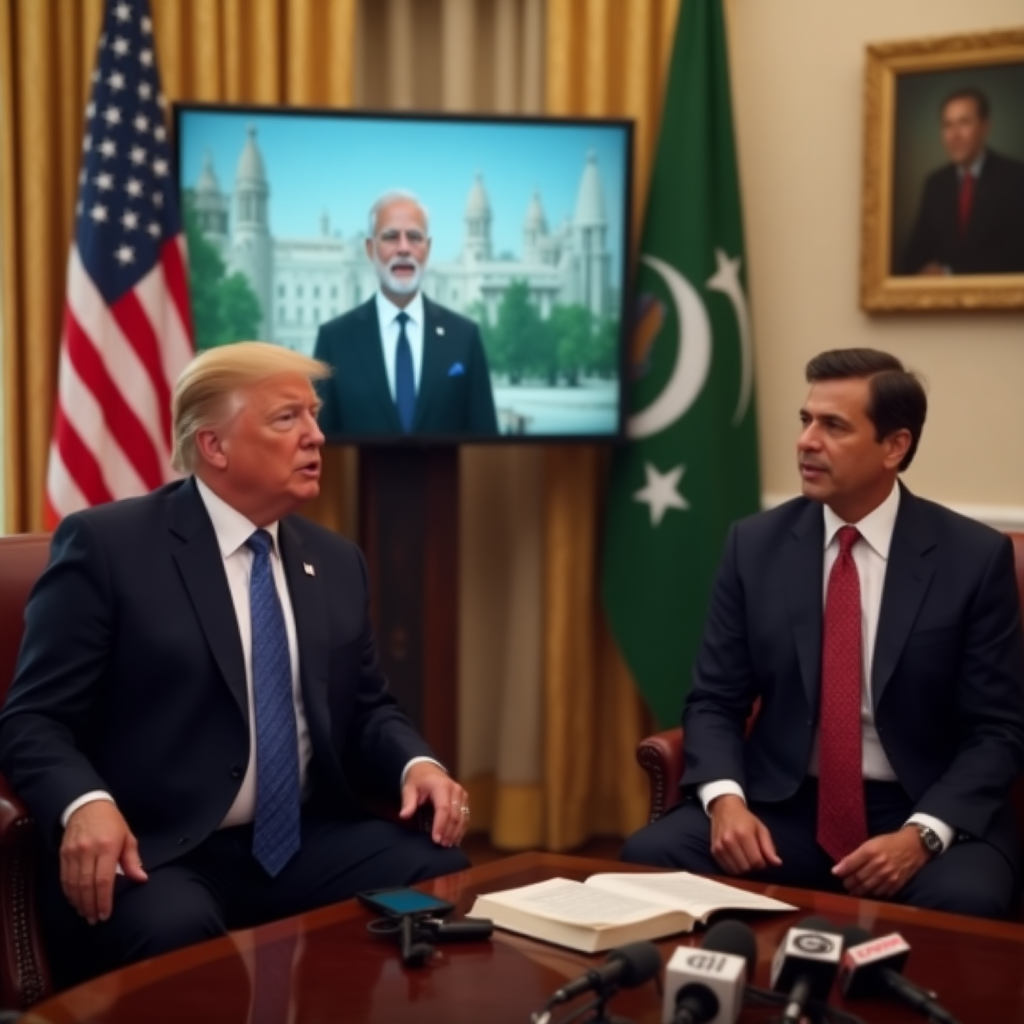
Against this backdrop, Trump’s remarks in July 2019 took both Indian officials and the media by surprise. Sitting beside Pakistani Prime Minister Imran Khan in the Oval Office, Trump claimed that Indian Prime Minister Narendra Modi had asked him to “mediate or arbitrate” on the Kashmir dispute, a statement that risked intensifying the conflict between the two countries.
Within hours, India’s Ministry of External Affairs issued a firm rebuttal, stating unequivocally that no such request had been made and that India remained committed to resolving all outstanding issues with Pakistan bilaterally. The statement was pointed and left little room for interpretation, reflecting how seriously New Delhi viewed the need to guard its sovereign position on Kashmir .
The timing of Trump’s comments added to the sensitivity. Just weeks later, on August 5, 2019, the Modi government revoked Article 370 of the Indian Constitution, which granted special status to Jammu and Kashmir. This move was hailed by many within India but sharply criticized by Pakistan, which sought international condemnation of the decision. In this tense environment, Trump reiterated his offer to mediate, further irritating Indian officials, who saw his remarks as an unwelcome intrusion into a domestic matter.
For Trump, such comments appeared to be part of his broader diplomatic style—offering to mediate in longstanding international disputes, from North Korea to the Middle East, often in off-the-cuff statements that caught his own advisers by surprise. For India, however, Kashmir is not just another regional conflict but a core national security and sovereignty issue, making any suggestion of third-party involvement a political red line.
Despite the initial diplomatic friction, the episode did not cause a lasting rupture in relations. India managed the situation through firm but measured public statements, while the Trump administration did not press the matter in any formal capacity. However, it served as a reminder that even close partners can sometimes misread each other’s political sensitivities, especially when leaders have different communication styles and when moments of tension risk escalating into a conflict.
Trump and India Conflict — Conclusion
Despite these moments of tension—in trade, tariffs, immigration, defense procurement, and diplomatic rhetoric—the broader trajectory of U.S.–India relations under Trump remained positive, even strengthening in several key areas.
Strategically, the two countries deepened their cooperation in the Indo-Pacific region, driven by a shared concern over China’s growing assertiveness. The Trump administration’s Indo-Pacific Strategy explicitly recognized India as a central pillar of regional stability, and the two nations worked together within frameworks like the Quadrilateral Security Dialogue (Quad) alongside Japan and Australia.
Defense ties reached new heights, with both countries signing important agreements to enhance military interoperability and intelligence sharing, such as the Communications Compatibility and Security Agreement (COMCASA) in 2018 and the Basic Exchange and Cooperation Agreement (BECA) in 2020. Joint military exercises, including the annual Malabar naval drills, expanded in scope and complexity.
Economically, while trade disputes persisted, bilateral trade volumes continued to grow. U.S. companies increased investments in India’s technology, manufacturing, and energy sectors, while Indian firms expanded their presence in the American market. The flow of people—students, professionals, and tourists—remained robust, underscoring the deep societal links between the two countries, even during periods of Trump-era trade tensions and the occasional diplomatic conflict.
One of the symbolic high points of the relationship was Trump’s state visit to India in February 2020. The trip included a massive public rally in Ahmedabad dubbed “Namaste Trump,” attended by over 100,000 people, and was widely covered by the global media. The visit showcased the personal rapport between Trump and Modi and reaffirmed the importance both leaders placed on the partnership.
In the realm of counterterrorism, the two countries enhanced intelligence sharing and reiterated their commitment to combating extremist groups. They also coordinated on global issues such as maritime security, energy cooperation, and pandemic response during the early stages of COVID-19.
In short, while Trump’s presidency was marked by specific disputes and occasional public missteps, these did not derail the broader momentum of the U.S.–India partnership. The relationship remained anchored in a convergence of strategic interests, economic opportunities, and democratic values—a foundation strong enough to weather temporary policy conflict and disagreements.
2 thoughts on “Trump and India Conflict : 5 Major Reasons Trade, Immigration, Defense, and Diplomatic Tensions”